corkboard: every agent you're running, on one board
corkboard is a workspace for running many Claude Code agents at once. Each session is a card on the project's board. Agents claim cards, work in git worktrees of their own and hand their work back for review; one look at the board says which are working, which are waiting on you and which are ready to merge. It is our own product, and it is open source.
17 daysfrom the first commit to a signed release for every desktop.
243commits, about 70,000 lines of TypeScript, Lua and Nix.
4places to use it: Neovim, the desktop app, the browser and the phone.
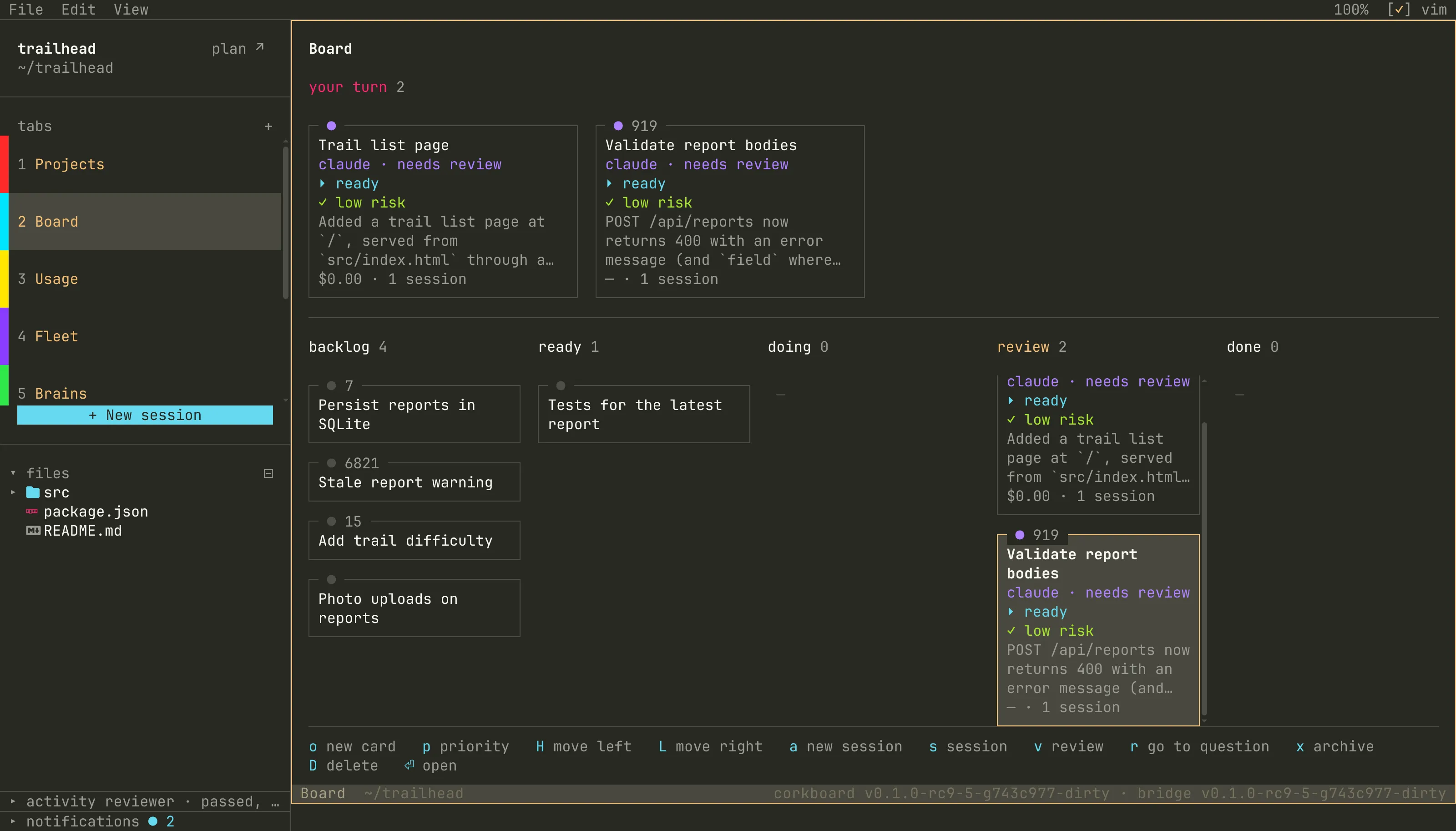
A front end built around the review
Running one agent is easy; running six means losing track of which one needs you. The board answers that first. A card shows who is working on it, whether it is running, blocked on a question or done, what it has cost and a one-line summary of what changed. Everything is a keystroke away: a new card, a new session, a review.
- Sessions beside their card
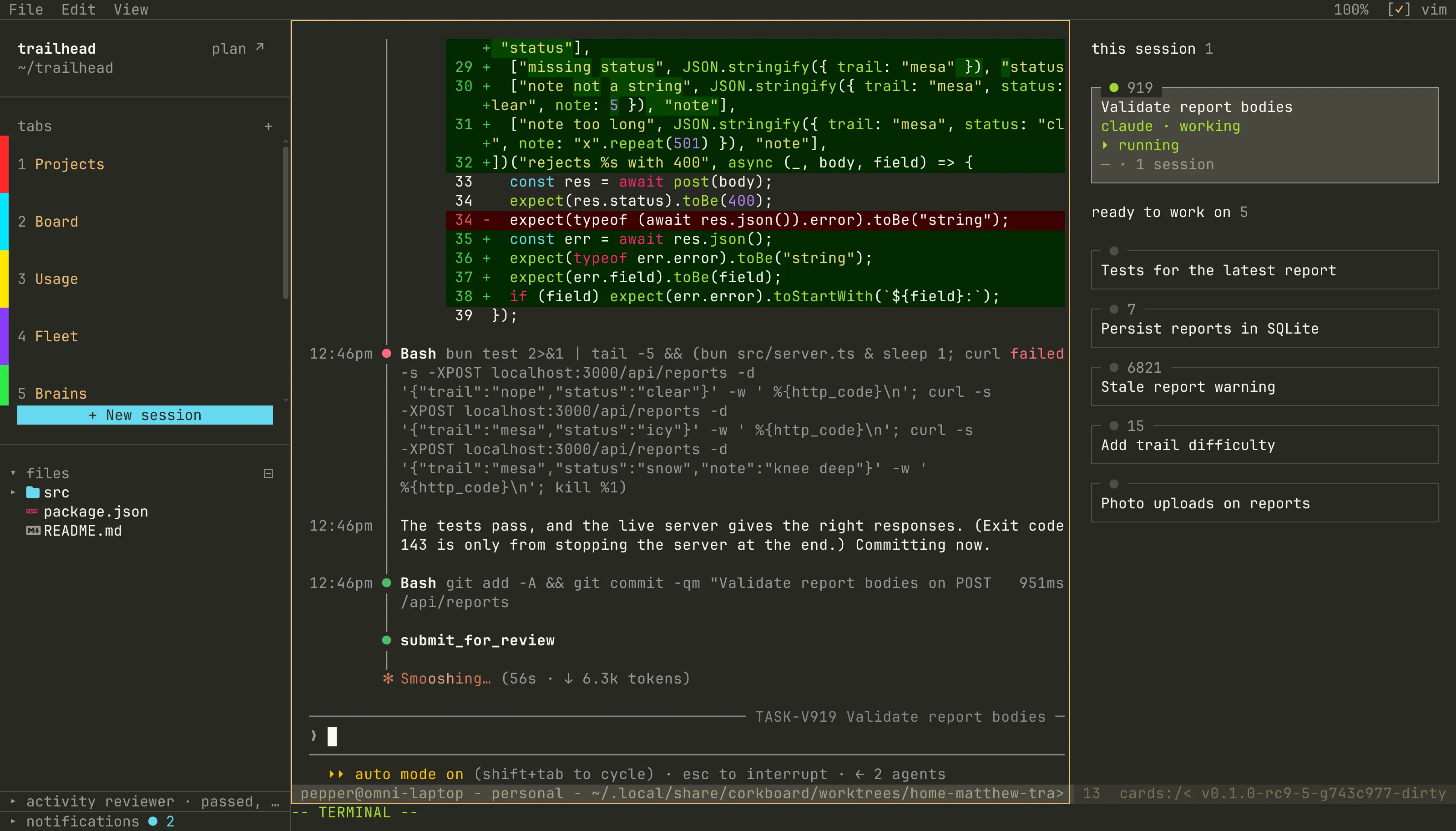
- Opening a card opens its agent: the live Claude Code session in the middle, the card and the rest of the queue beside it. Terminals, diffs and transcripts are ordinary Neovim windows, so they split, search and yank like any other buffer.
- Review in one screen
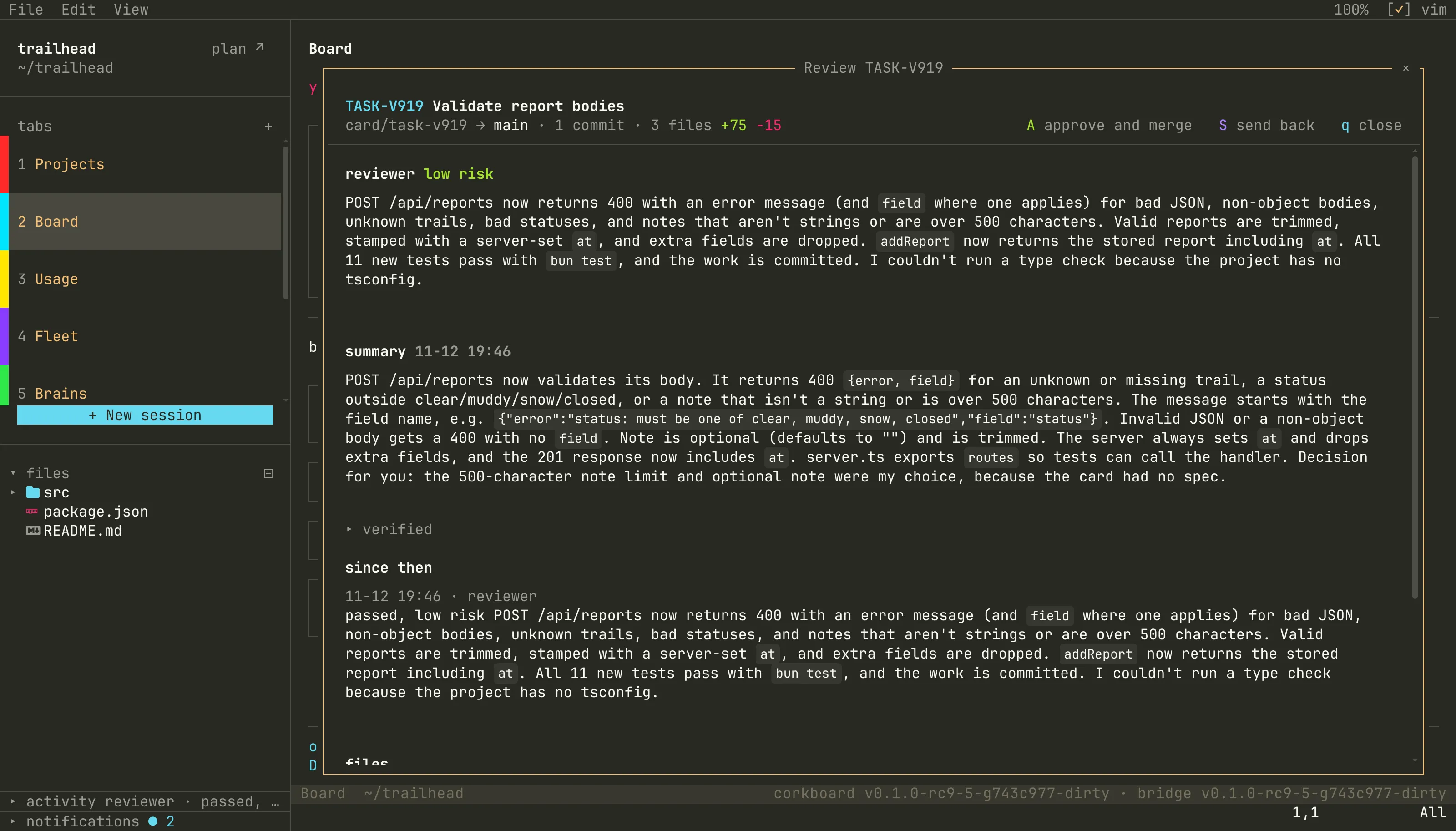
- When an agent submits, a second agent reads the diff and grades the risk. The review screen puts that grade, the agent's own summary, the branch and the size of the change together, with approve-and-merge and send-back on single keys.
- The same board everywhere
- The interface runs in Neovim, in an Electron desktop app, in the browser and in a native Android app, all reading the same synced board. A session started on the laptop can be answered from the phone.
Installable on day one
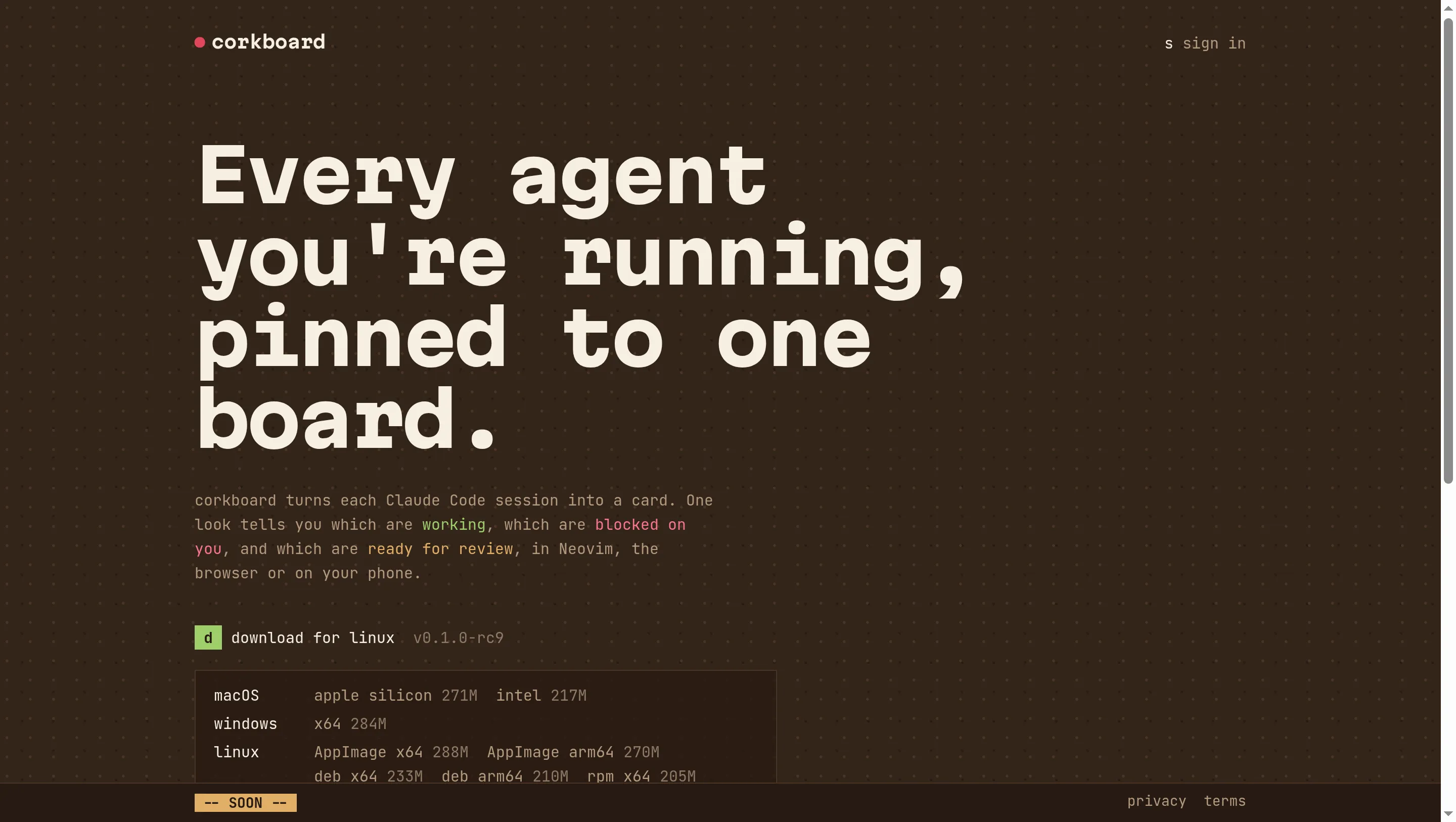
A tool like this is only useful if it installs in a minute. We wrote the landing page at corkboard.fyi and the release pipeline behind it: a signed and notarised DMG for Apple silicon and Intel with a Homebrew cask, a Windows installer, AppImage, deb and rpm packages for x64 and arm64 with our own apt and dnf repositories, an AUR package and a Nix flake. The desktop app updates itself. Five release candidates went out between 3 and 9 November.
Sync, and a fleet of machines for the agents
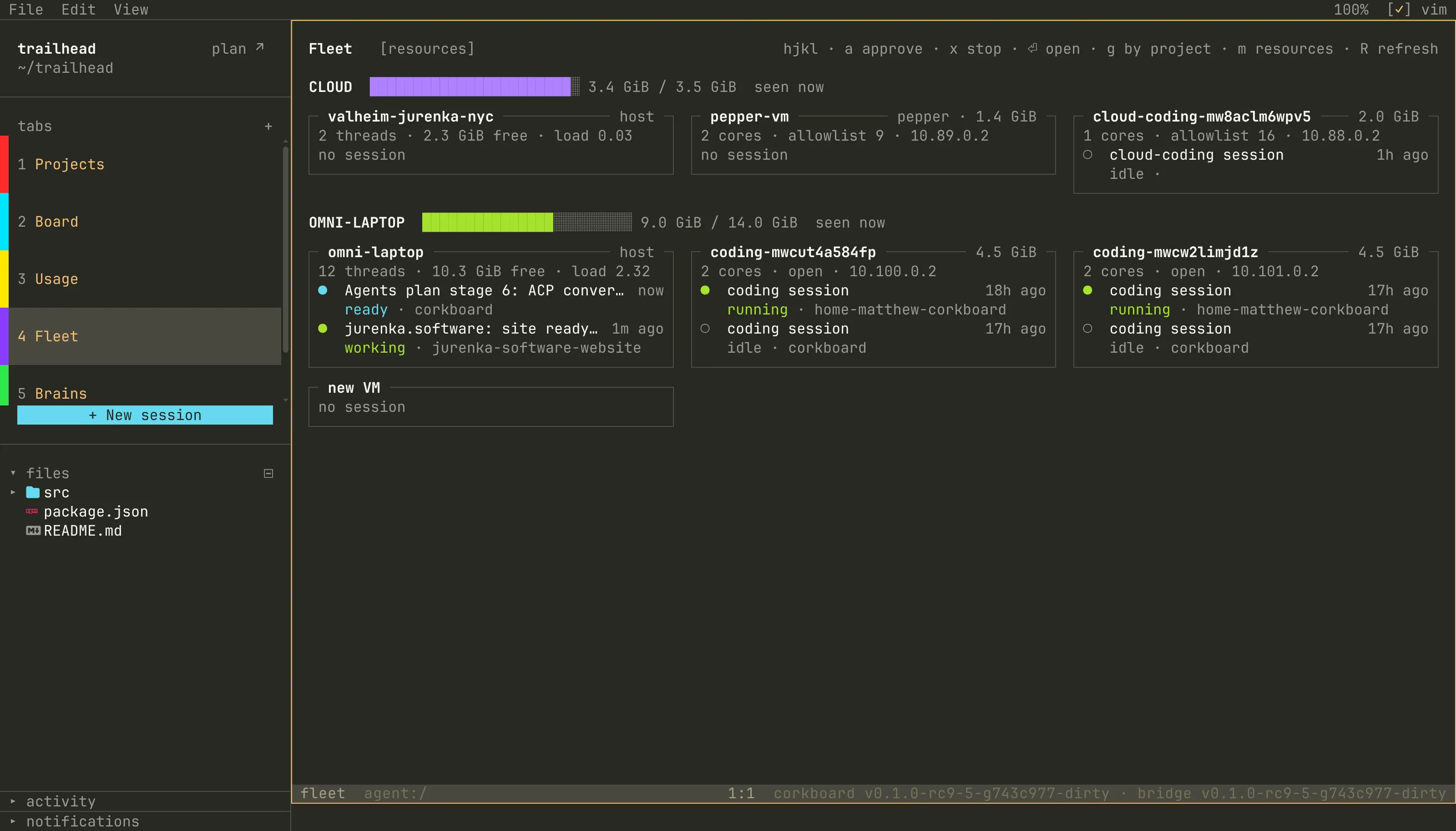
Boards sync between devices end to end encrypted. The relay is a Cloudflare Worker that only ever stores ciphertext, and anyone can host their own; devices pair with each other and a recovery phrase brings an account back. Agents can run on the laptop or away from it: each gets a NixOS virtual machine, on the laptop or on a cloud server, and the fleet view shows every machine, its memory and the sessions running on it.
Where the numbers come from
Days, commits and lines are counted from the public repository: the first commit was on 23 October 2026 and release candidate 9 shipped on 9 November. The board, session and review screenshots show a small demo project, worked on by real Claude Code sessions; the fleet screenshot is of our own machines.
Building something like this?
We can design the interface, write the app on every platform it needs, and build the infrastructure it runs on.